
Support for Reactivity & Behavior Challenges in Yamhill County
Behavior is communication. When a dog barks, lunges, or panics, they aren't 'bad' or 'dominant' — they are overwhelmed. We help you decode what they need and create a calmer world together.
A Safe, Non-Judgmental Space:
Walking a reactive dog can feel isolating and embarrassing. We’ve been there, we understand, and you’ll find zero judgment here. We meet you and your dog exactly where you are today.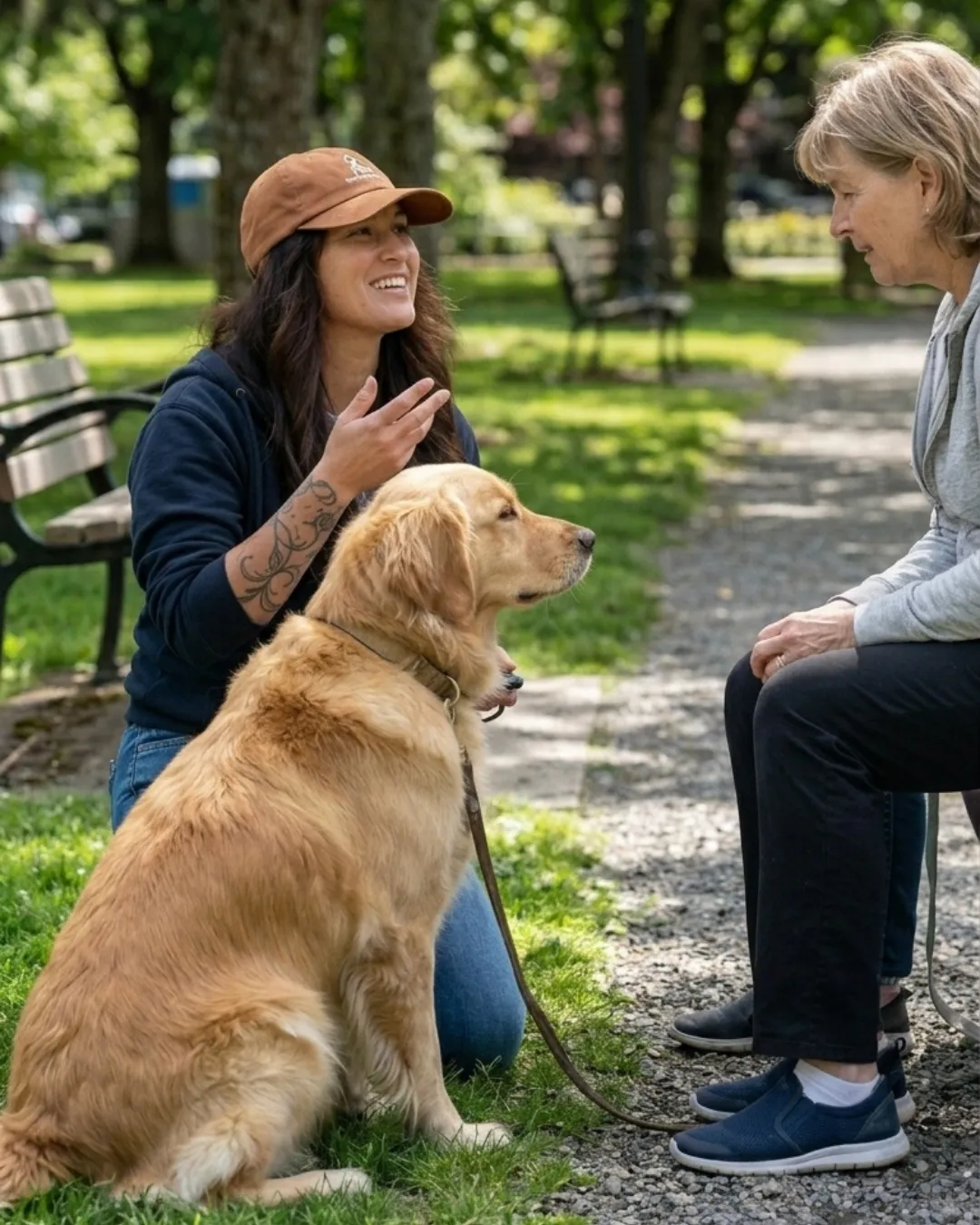
Less Stress, Greater Trust
Evidence-based, fear-free methods by a certified behavior consultant.
What You Might Be Experiencing
If walking your dog feels like a high-stakes mission where you constantly scan for other dogs, you don't have to navigate it alone.
Barking & Lunging on Walks
Big reactions at the sight of another dog, person, cyclist, or passing vehicle.
Overarousal & Hard to Recover
Once triggered, taking several minutes or hours to decompress and breathe calmly.
Fearfulness & Sound Sensitivity
Wary of strangers, nervous about unfamiliar surroundings, or spooked by noises.
Intense Barrier Frustration
Reacting strongly through fences, windows, car glass, or tight leash restraint.
Stress When Visitors Enter
Nervousness, incessant barking, or hyper-vigilance whenever guests step inside.
Sensitive / High-Vigilance Dogs
Dogs who always seem 'on guard,' scanning the horizon for potential threats.
Our Approach to Behavior & Reactivity
We do not punish emotional responses. We systematically change how your dog feels about their environment.
1. Understanding Before Fixing
Reactivity is almost always driven by fear, frustration, or overwhelm — not 'dominance' or malice. We figure out what your dog is feeling first.
2. Reducing Everyday Stress
A dog whose stress bucket is already full cannot learn. We design immediate, low-stress management strategies to give your dog (and you!) immediate relief.
3. Changing the Emotional Response
Through gentle desensitization and counter-conditioning, we help your dog build positive associations with triggers at a safe, comfortable distance.
4. Practical Handling Skills
You’ll learn emergency U-turns, scent-work resets, and leash handling skills that keep walks safe, predictable, and manageable.
"Mandy’s training style helped US learn how to contain our dog’s emotions. Mandy was patient, clear, and super supportive. Our dog made real progress, and we learned practical techniques we can use every day. Mandy was friendly, professional, and truly effective. Highly recommend!"
Chrissy Bynum
Family Dog
Reactivity & Behavior Consulting FAQ
Does my dog have to be near their triggers during training?
No! In fact, we intentionally work sub-threshold (at distances where your dog can notice a trigger without panicking or reacting). We never flood or force a dog to endure terrifying situations.
Why don't you use shock or prong collars to stop reactivity?
Punishing a growl, bark, or lunge suppresses the outward warning sign while leaving the underlying fear or stress intact (or worsening it). Shock and prong collars often cause dogs to associate the trigger with pain, increasing the risk of explosive outbursts later. We change how the dog feels.
What types of cases do you take, and when do you refer out?
Pacific North Woof works with leash reactivity, barking, barrier frustration, overexcitement, and mild-to-moderate fear. We do not take cases involving severe dog-on-dog aggression, human bites with significant tissue damage, or severe bite histories. If a case falls outside our scope, we will compassionately refer you to qualified veterinary behaviorists or clinical specialists.
How long does behavior modification take?
Behavior modification is a journey of building new neural pathways and trust. While management shifts can provide immediate peace in week one, true emotional change is gradual. We provide you with lifelong skills to guide your dog through it.
Tell Us About Your Dog
Serving Yamhill County with personalized in-home training. Fill out this short form to get personalized guidance.